

Por Beatriz Silva
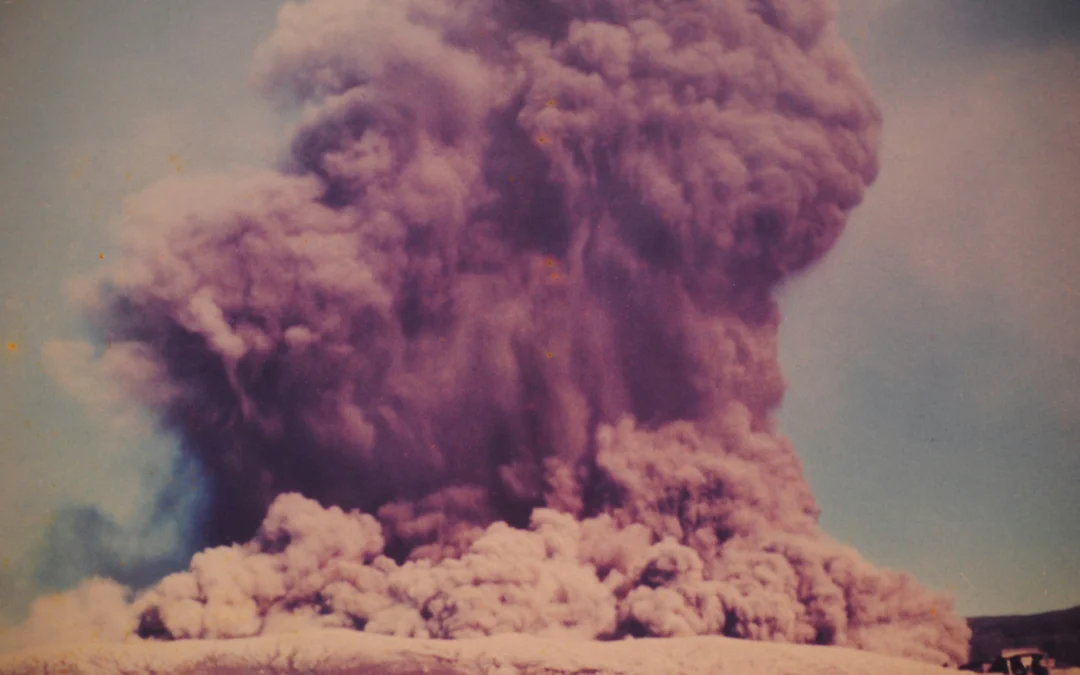
Last year marked eighty years since the nuclear attacks to Hiroshima and Nagasaki. In 2026, the 11th Review Conference on the Non-Proliferation Treaty (NPT) took place. Recent estimates indicate that there are approximately 12 thousand warheads in the world today. This is a significant decrease in comparison to the all-time high of 70 thousand. This means the NPT was a success. Right?
In reality, we are closer than ever to catastrophe. The Bulletin of the Atomic Scientists has measured, since 1947, the probability of a nuclear disaster, illustrating it through a clock: the closer to midnight, the more likely the use of a nuclear weapon. In 1964, two years after the Cuban Missile Crisis, the clock read 12 minutes to midnight. Today, we are only 89 seconds away.
In the first two and only uses of the atomic bomb in the context of an armed conflict, 110 thousand people were killed instantly, and 60 more died due to related injuries by the end of a year. Despite this humanitarian catastrophe, the nuclear race had just begun: forty years later, an estimate of 70 thousand warheads existed between the Cold War’s nuclear powers.
The world was a powder keg about to explode, and this would be no common explosion. During the nuclear race, weapons increased not only in quantity, but in quality, and unlike the events of 1945, any attack would imply a counter-strike. The humanitarian, environmental, and economic impact would be nearly impossible to measure. Thus, in 1965, the negotiations began for the NPT. The objective of this instrument is to prevent the development of new nuclear weapons, and to eventually eliminate them entirely. The NPT went into effect in 1970, ratified by six of the world’s nuclearized powers — the countries who have been confirmed to own nuclear weapons, ordered by number of warheads, are: Russia, the United States, China, France, the United Kingdom, India, Pakistan, Israel, and North Korea. Among them, India, Israel and North Korea have not signed the NPT. None of them have signed the Treaty on the Prohibition of Nuclear Weapons.
Year after year, the NPT negotiations have failed, but pose as successes. The number of warheads has decreased, but their destructive potential has increased exponentially. The investments into new bellicose nuclear technologies are in the dozens of billions. Worse yet, the threats of use of these technologies are becoming more and more concrete as armed conflict multiplies around the globe, and as restrictive measures like the New START agreement between the United States and Russia, are dismantled. Since most nuclear-armed countries (and their allies who store nuclear weapons in their own territories) are NATO members, a single use of a nuclear weapon would be immeasurably catastrophic.
Why are we here?
Nuclear discourse
Part of what prevents the elimination of nuclear weapons is the way they are discussed.
The doctrine that prevails in contemporary nuclear policy (and the NPT) is deterrence. It determines that the best way to mitigate the threat of nuclear weapons is to arm yourself to the teeth, because then, the consequences of use would be severe enough to discourage it. It is an inherently contradictory line of thinking: the presence of nuclear weapons ensures their absence. Further, the NPT grants special status to nuclearized countries that allows them a certain amount of privilege, and in practice, allows them to remain armed. It does not make sense for a disarmament treaty to contend with long-term armament.
For this reason, nuclearized nations’ approach to disarmament forums is all-or-nothing. If my rivals won’t disarm, completely and all at once, neither will I. And, of course, nobody wants to be the one to take the first step and be put in a vulnerable position. Thus, nuclearized countries emulate collaboration with the process by asking for a gradual process of disarmament while simultaneously refusing to advance a single millimeter.
Faced with this situation, a coalition of organizations and activists with explicitly humanitarian interests organized to create a new instrument: the Treaty on the Prohibition of Nuclear Weapons (TPNW). Unlike the NPT, the TPNW establishes that the only way to create a world safe from the danger of the nuclear weapons is to eliminate them, therefore, the only acceptable number of nuclear weapons is zero. Sadly, the number of nuclearized countries that have signed the TMPW is also zero.
At a discourse level, there is a clear difference between the rhetoric that feeds each of these treaties. The logic behind the TNPW is, again, humanitarian. The argument is that nuclear weapons are ethical aberrations that only exist to take human lives, which means they should not exist. On the other hand, the NPT prioritizes the strategic balance between nuclearized powers. The good of humanity versus the abstract gains of select nations’ leaders. Which is more important?
What does gender have to do with nuclear weapons?
The feminist scholar Carol Cohn participated, in the eighties, in a nuclear policy study program in the US Department of State. She recalls a story told by a male colleague: during one nuclear strike simulation, after adjustments, the estimated death toll fell from 36 million to 30 million. The group celebrated. What a relief! Now, “only” 30 million lives would be lost. The colleague, in a moment of self-awareness, called attention to what they were really saying. Only 30 million? Immediately, the room fell silent, looking at him as though he had said something embarrassing. About this moment, he told Cohn: I felt like a woman.
Another story, this time from the 21st century. Ray Acheson, a specialist and feminist who participated in the negotiations that preceded the TPNW, reports that the behavior of nuclearized countries in these procedures ranged from boycotts to hostility. For example, the Russian delegation (representing the country that holds the greatest number of nuclear warheads on the planet) responded in a revealing way: by accusing humanitarian groups of being emotional, irrational. We can identify a pattern. One of the rhetorical strategies to delegitimize the TPNW, and the abolitionist movement in general, is to associate it with traditionally feminine behaviors. Caring about human lives is women’s business, and for this reason, it should not be taken seriously.
Gendered associations become even clearer when we examine the weapons themselves are discussed.
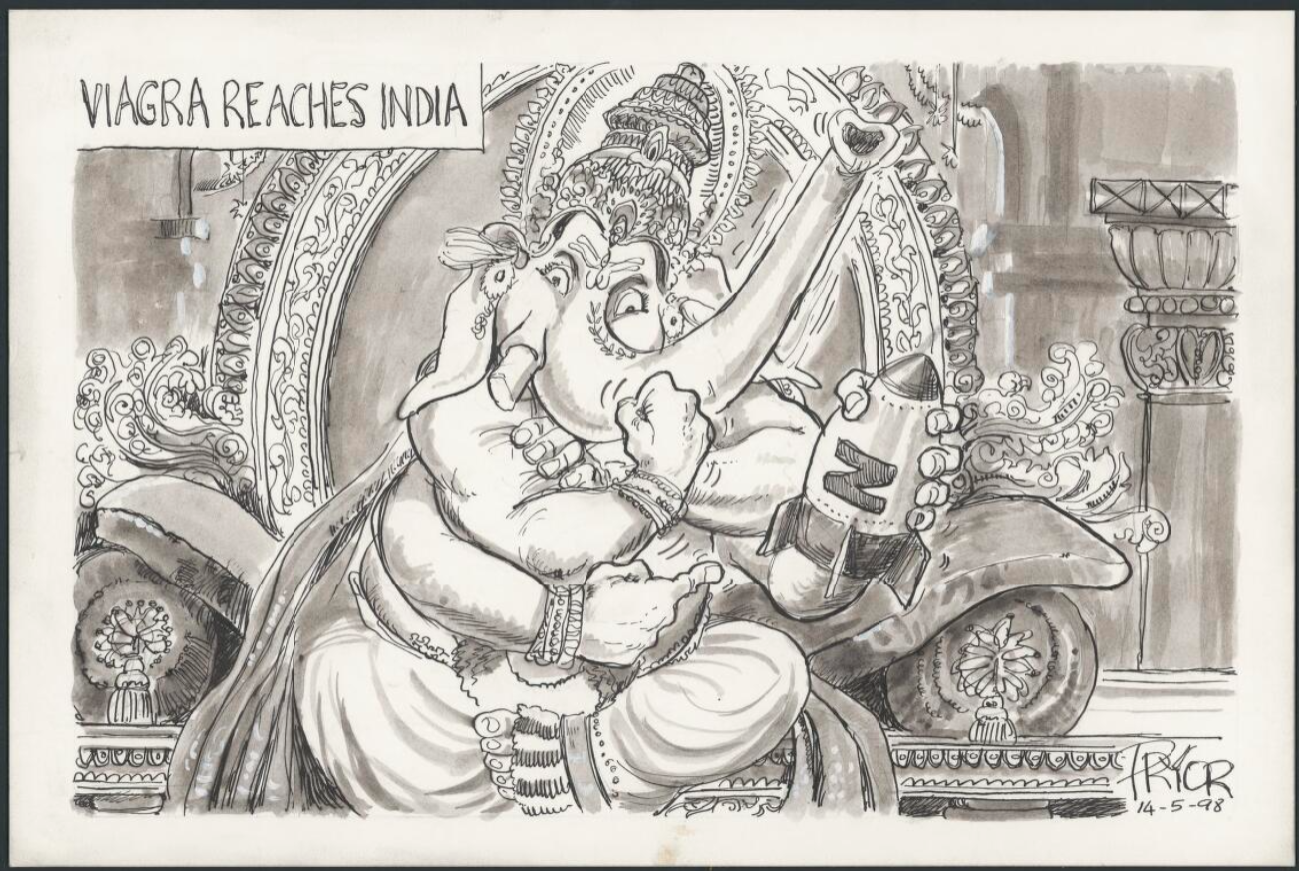
This is a comic published in 1998, when India began nuclear testing. The comparison is clear: the bomb stands in for a penis, understood as a symbol of strength and virility. Cohn also discusses the connections between gender and nuclearity. In her studies of nuclear policy discourse, she notes that language describing bombs was almost explicitly phallic, while denuclearized countries were feminized, for instance, associated with notions of virginity.
This association between masculinity and nuclearity has some implications. First, that to disarm means to castrate. In an international system that values symbolic masculinity and understands it as a synonym of strength, to castrate oneself is to weaken oneself (the opposite is also true: to arm oneself is to strengthen oneself, and the “bigger” the weapon, the better). Therefore, and second, a nuclear weapon starts being understood as something necessary to avoid the weakening of the State. Thus, the weapon becomes something that protects, not that threatens, and the nuclearized state assumes the role of a protective man.
This gendered divide can be observed during conversations on both treaties. In debates about the TPNW in the Spanish parliament, for example, parliamentarians used words like “pragmatic,” “realistic,” and “concrete” to discuss the NPT, positioning it opposite the TPNW. They defend the NPT’s gradual implementation, rather than the TPNW’S radical and irrational strategy. In this way, the NPT, as a treaty that legitimizes the ownership of nuclear weapons, allows nuclearized states to maintain their hyper-masculine status, the air of protectiveness, and their nuclear weapons with no guarantees that they will actually participate in the “gradual” disarmament process.
It is also important to note the racialized connotations of nuclear discourse. For instance, at the UN, the USA described itself and its nuclear capacities with words like “strong,” “robust,” “objective,” that is, adjectives with masculine connotations. However, in describing nations in the Global South, like North Korea or India, the language changes: “provocative,” “volatile,’ “delicate.” This results in the legitimation and neutralization of nuclear weapons. In other words: a weapon that can kill millions in instants is a neutral object, the morality of which depends solely on the intentions of its owner. This is even more relevant considering that, out of 95 TPNW signatories, only five are in the Global North: Ireland, Austria, Malta, San Marino, and the Holy See.
Brazil’s position in the nuclear debate
Brazil actively participated in the TNPW negotiations at the UN. It made history as the world’s first country to sign the treaty, in 2017. However, ratification has remained stagnant in parliament since 2018. Though there have been no formal votes in the Brazilian parliament, it is is interesting to analyze parliamentarians’ rhetoric. Arguments against ratification boil down to the following: the Treaty prevents Brazil from developing nuclear weapons, or as put by far-right deputy Luiz Philippe de Orleans e Bragança, it is an imposition on the country’s right to self-defense.
The issue? Brazil has already ratified a number of treaties, including the NPT, that prevent it from developing nuclear weapons. In practice, the TPNW is redundant, therefore, its refusal is political. It is a failed argument against a hypothetical castration of our military capabilities. Still, it is the argument nauseatingly repeated, especially by parliamentarians on the right, that prevent the validation of this important treaty in our country, which weakens it on the world stage.
How to face the future in the context of nuclear competition?
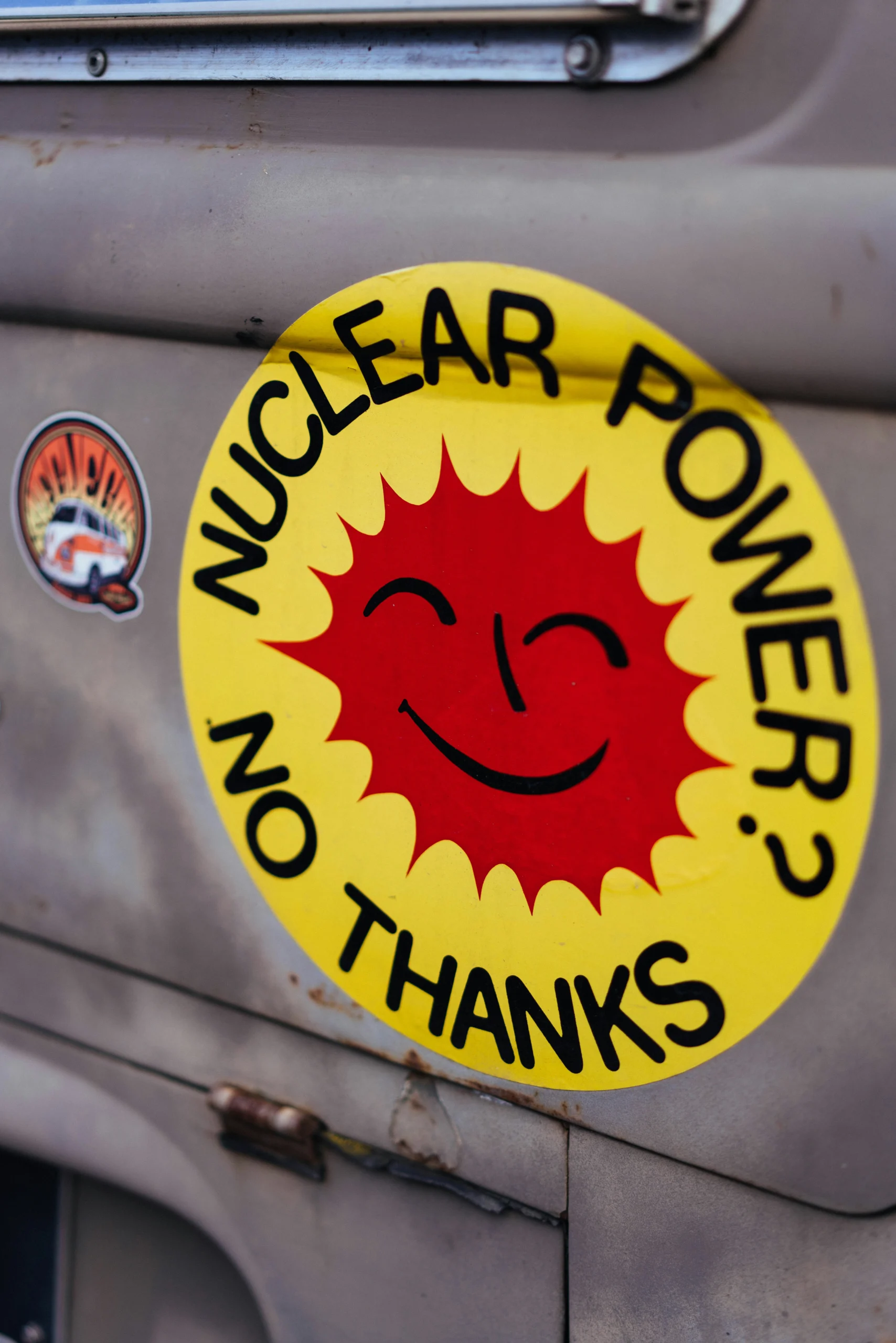
A nuclear weapon has not been used in 81 years. However, the radiation levels in the first nuclear test site in history, in the United States, remain ten times higher than normal. Some test sites remain uninhabitable to this day. Besides, the collateral effects are expressed disproportionately in women and girls: people assigned female at birth are more likely to develop cancer, cardiac, and strokes as a result of radiation, and children aged zero to five are particularly at risk.
That is: the impact of nuclear weapons did not stay behind in 1945. It is alive, and can grow catastrophically in the current scenario of intense conflict. Things will stay this way while we keep understanding nuclear weapons as something “thinkable” or necessary in an emergency. The priority should always be the integrity of humans, animals, the waters, the forests. Thus, we should reject the rhetoric that valuing all of that above the abstract strategic balance of armed nations’ security force is irrational, frivolous. Nuclear weapons are a humanitarian, social, and environmental issue that concerns all of us.
Perguntas Frequentes
What is the Treaty on the Prohibition of Nuclear Weapons (TPNW)?+
How is the TPNW different from the Non-Proliferation Treaty (NPT)?+
Why is nuclear disarmament discourse considered gendered?+
What is the Doomsday Clock, and how close is it to midnight today?+
What is Brazil's position on the TPNW?+
Are the effects of nuclear weapons and radiation gendered?+